
Commercial roof maintenance in Sacramento: what property managers need to know
By Shoail · Updated 2026-07-18
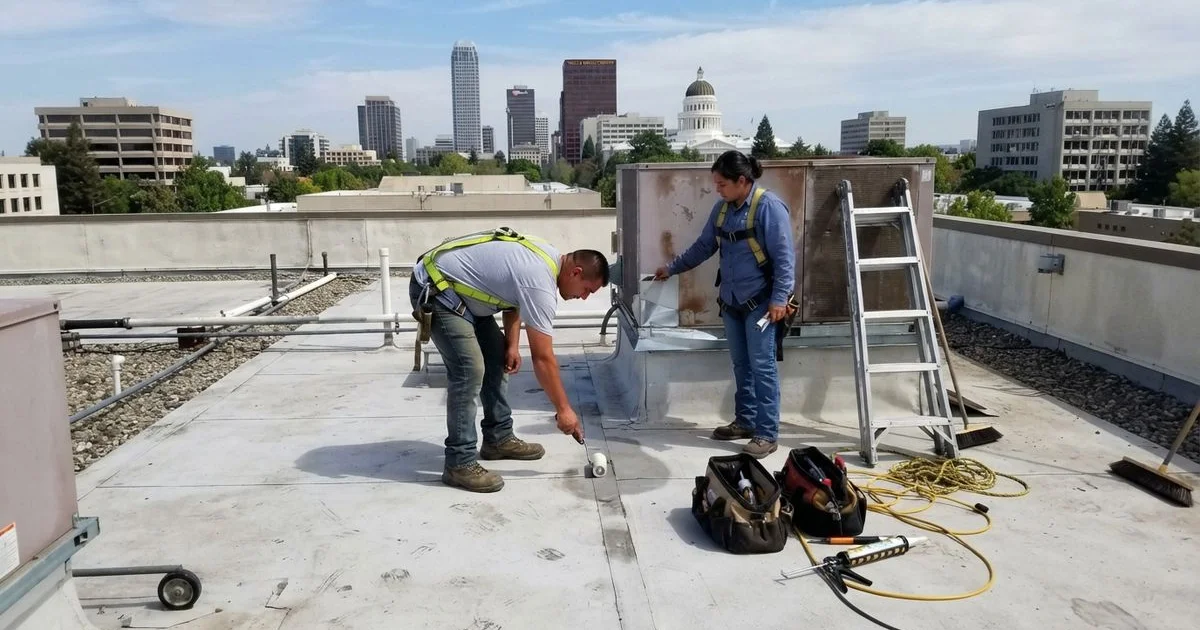
Commercial roofs, whether on a retail building, warehouse, or office property, carry a different maintenance rhythm than a residential roof. They’re typically flat or low-slope, cover a much larger area, and a failure affects tenants, inventory, or operations rather than just a homeowner’s inconvenience.
Why commercial roofs need a different approach
Flat and low-slope roofs rely on membrane systems like TPO, EPDM, or modified bitumen rather than shingles, and their failure modes are different too. Where a residential shingle roof usually shows visible wear before it leaks, a flat commercial roof can develop a leak from a small membrane puncture or seam failure that isn’t obvious from a casual look. That makes scheduled inspection more important than reactive “wait until it leaks” maintenance.
A practical inspection schedule
A twice-yearly inspection, roughly in spring and fall, catches most developing issues before they turn into leaks. Spring inspections after the winter’s rain check for any damage that occurred during wet weather, while fall inspections before the rainy season confirm drainage and seals are ready for it. On top of that baseline, an inspection after any significant storm is worth scheduling regardless of where you are in the regular cycle.
| Inspection timing | What it catches |
|---|---|
| Spring, after winter rain | Damage from the wet season, ponding evidence |
| Fall, before rainy season | Drainage function, seal condition ahead of rain |
| After a major storm | Wind damage, debris impact, membrane punctures |
| Annually, structural review | Overall remaining service life assessment |
Common failure points on flat and low-slope roofs
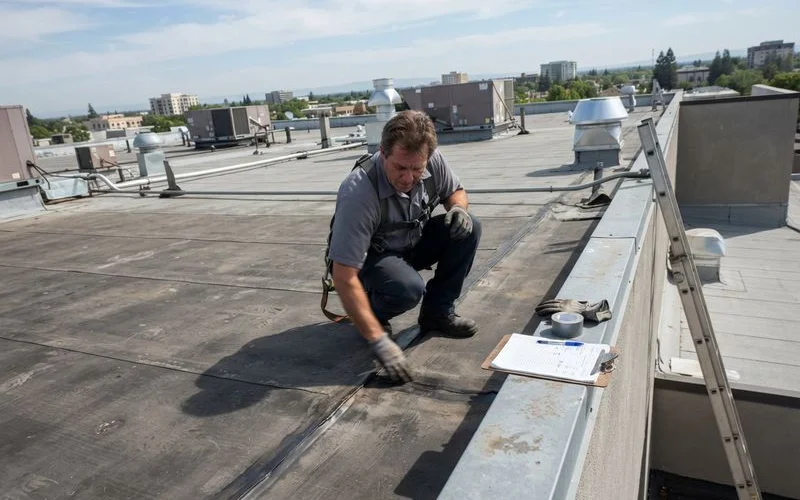
Ponding water is one of the more frequent issues: if drainage slopes aren’t adequate, water collects and sits on the roof surface, accelerating wear on the membrane and eventually finding a way through at a seam or low spot. Membrane punctures from foot traffic, dropped tools, or HVAC servicing are another common cause, often small enough to go unnoticed until they’ve let water in for a while. Flashing around rooftop equipment, vents, and parapet walls is a third recurring weak point, similar to residential roofing but multiplied by the number of rooftop units a commercial building typically carries.
Budgeting: repair versus replacement
A single leak or a small membrane repair is usually straightforward to budget for reactively. The harder call is knowing when recurring repairs in different spots signal that the underlying membrane is at the end of its useful life. If your maintenance log shows repeat visits to the same building over a year or two, it’s worth asking your commercial roofing contractor for a full remaining-life assessment rather than continuing to approve one-off patch jobs. Proactively budgeting for a replacement on your own timeline is almost always less disruptive, and often less expensive overall, than an emergency replacement forced by a major failure. If you also manage residential rental units on a tighter budget, free and low-cost roof repair help in Sacramento covers assistance options that don’t apply to commercial property.
Getting a maintenance plan into your contract
Many commercial roofing contractors offer a structured maintenance agreement, scheduled inspections and minor repairs bundled into a recurring contract, separate from calling for one-off repairs as they come up. This tends to work in your favor as a property manager: it creates a documented inspection history, which is useful both for your own budgeting and for insurance purposes if a larger claim ever comes up, and it often catches small problems before they become the kind of failure that disrupts tenants.
Coordinating around tenants and operations
Commercial roof work usually has to fit around a building’s actual use, in a way residential jobs don’t. A retail property may need work scheduled outside business hours, a warehouse might need loading dock access kept clear, and any building with rooftop HVAC units needs coordination so servicing one system doesn’t interfere with roof work happening nearby. Bringing this up with a contractor before scheduling, rather than after a crew shows up, avoids the kind of disruption that generates tenant complaints even when the underlying roof work is handled competently.
Documentation you’ll want later
Keep copies of every inspection report, repair invoice, and warranty document tied to the roof, organized by date. Beyond the obvious budgeting value, this record matters if you ever sell or refinance the property, since a buyer’s due diligence process typically asks for exactly this kind of maintenance history. It also strengthens your position if a manufacturer or workmanship warranty claim comes up years after an install, since disputes over what was done and when are much easier to resolve with paperwork than without it.
Browse this directory for commercial roofing contractors in the area, and see the ranking method for how they’re evaluated.
FAQ
- How often should a commercial roof be inspected?
- Twice a year is a common baseline, once in spring after winter rain and once in fall before it, plus an additional check after any major storm. Roofs with known problem areas or nearing the end of their expected service life often benefit from more frequent checks.
- What's the most common failure point on a flat commercial roof?
- Ponding water, where drainage is poor enough that water sits on the roof surface rather than draining off, is one of the more common issues, since standing water accelerates membrane wear and can eventually lead to leaks even on a roof that's otherwise in decent condition.
- Is it cheaper to maintain an aging roof or replace it?
- It depends on how far along the roof is and how often repairs are needed. A roof requiring frequent, recurring repairs in the same areas is often signaling that a full replacement, budgeted for proactively, will cost less over time than ongoing patchwork.
- Do commercial roofing contracts typically include a maintenance plan?
- Many do, structured as a scheduled inspection and minor-repair agreement separate from one-off repair calls. This can be worth negotiating into a contract, since it catches small issues before they become expensive ones.