
How to choose a roofing contractor in Sacramento
By Shoail · Updated 2026-06-18
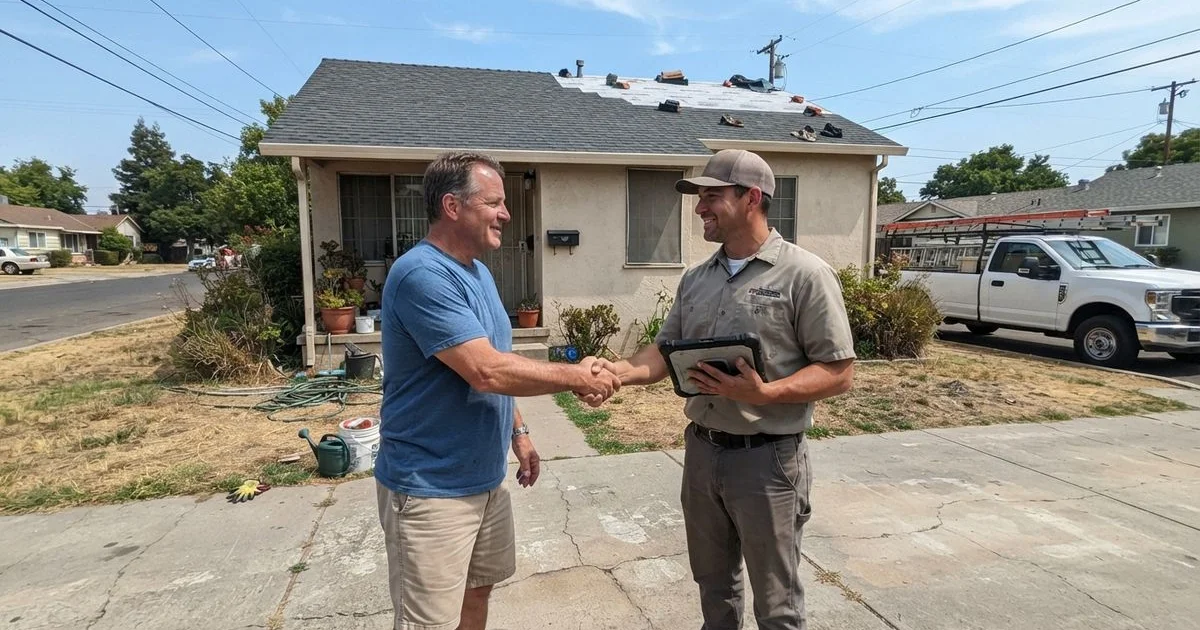
Choosing a roofer is not like picking a plumber for a one-off fix. A roof job is one of the larger checks a homeowner writes, the work is hard to inspect once it’s done, and problems from a bad install can take a year or two to show up. In Sacramento, where 348 roofing businesses are active and search interest in “roofing contractor” runs higher than any other term in the niche, the range in quality is wide enough that the vetting step matters as much as the price.
Start with licensing and insurance, not price
Before anything else, confirm the contractor holds an active California contractor license for roofing work (C-39). Ask for the license number directly and check it against the state board’s public lookup rather than trusting a number printed on a business card. A legitimate roofer will not hesitate to give it to you.
Insurance matters just as much. You want to see proof of both general liability coverage and workers’ compensation. Without workers’ comp, an injury on your property during the job can become your financial problem, not the contractor’s.
What a good roofer does differently
Corporate policy and reviews across the local corpus point to a consistent pattern: the businesses that keep customers happy are responsive in communication, price fairly and explain what’s driving the number, and clean the site thoroughly when the job wraps. The ones that generate complaints tend to share a different pattern: unclear scope that grows once work starts, slow replies after the deposit is paid, and warranty promises that turn out to be unenforceable.
That gives you a practical checklist for a first call or site visit.
| What to check | Green flag | Red flag |
|---|---|---|
| License | Verifiable, active, matches business name | Vague answer or “the crew has one” |
| Insurance | Certificate provided without asking twice | Reluctance to share proof |
| Quote detail | Line-item materials, labor, disposal, permit | One lump number, no breakdown |
| Timeline | Written start and completion window | “We’ll fit you in soon” |
| Payment | Small deposit, balance on completion | Large upfront payment demanded |
| Warranty | Written terms, workmanship period stated | Verbal-only promise |
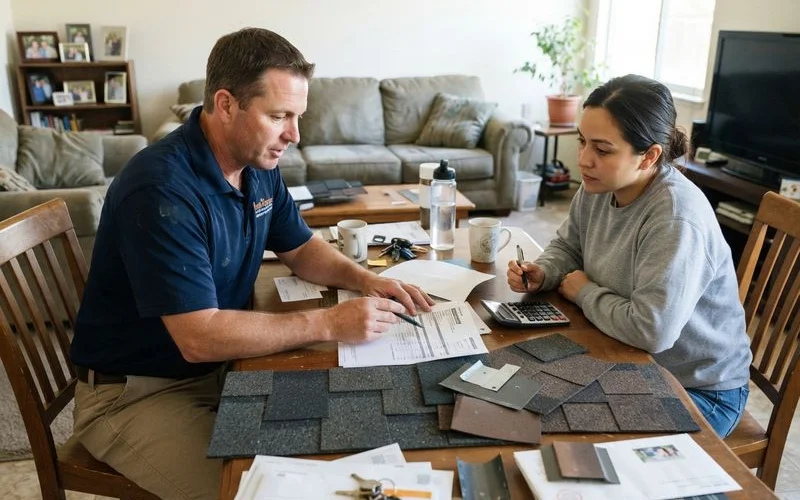
Get the scope in writing before a deposit changes hands
A written contract protects both sides. At minimum it should name the exact materials and brand being installed, the total price, a payment schedule tied to milestones rather than a single upfront sum, the estimated start and completion dates, who is responsible for pulling the building permit, and the warranty terms in writing rather than as a spoken assurance. If a contractor pushes back on putting terms in writing, treat that as information, not an inconvenience to work around.
Scope creep, where the final bill grows well past the estimate once work has started, shows up often enough in local complaint patterns to be worth guarding against specifically. Ask upfront how change orders are handled and get any additional cost approved in writing before the crew proceeds.
References and recent work
A contractor who has been doing solid work locally for years should be able to point you to a few recent jobs, ideally similar in scope to yours (same material, similar roof size). Recent matters more than total years in business: a contractor’s crew, subcontractor relationships, and quality control can shift over time, so a reference from five years ago tells you less than one from the last six months.
If you’re comparing several roofing contractors in Sacramento side by side, look for consistency in how each explains their process rather than just comparing the bottom-line price. A contractor who walks you through why the number is what it is, and what could change it, is generally easier to work with once the job is underway.
It also helps to know what the work itself typically looks like once you’ve signed. The roof leak repair guide walks through how a diagnosis-to-repair job usually runs, so you can compare it against the plan your chosen contractor lays out.
When to slow down
A few situations are worth pausing on rather than signing quickly: a contractor who showed up unsolicited after a storm and pressures same-day signing, a quote significantly below every other bid you’ve received with no explanation for the gap, or a request for full payment before any work begins. None of these automatically mean fraud, but each is common enough in the roofing trade that it’s worth a second call or a second opinion before committing.
Take the time upfront. A roof replacement or major repair is not something you want to redo in three years because the vetting step got skipped. If you want to see how this directory scores and ranks contractors before you start calling around, the ranking method page explains the criteria in full.
FAQ
- How do I verify a roofing contractor's license in California?
- Ask for their California contractor license number and look it up on the state licensing board's public database. Confirm the license is active, matches the business name on your quote, and covers the type of work you need.
- Should I always get multiple quotes?
- Yes. Three quotes is a reasonable minimum for anything beyond a small repair. It gives you a sense of the going rate and makes it easier to spot a bid that's unusually low or padded.
- Is the cheapest quote usually the best choice?
- Not necessarily. A quote well below the others can mean lower-grade materials, an unlicensed subcontractor, or corners cut on prep work that shows up later as a leak. Compare scope of work line by line, not just the total.
- What should be in writing before work starts?
- The contract should spell out materials and brand, total cost, payment schedule, start and completion dates, warranty terms, and who pulls the permit. Verbal promises that aren't in the contract are hard to enforce later.