
Roof leak repair in Sacramento: what causes it and what to expect
By Shoail · Updated 2026-06-22
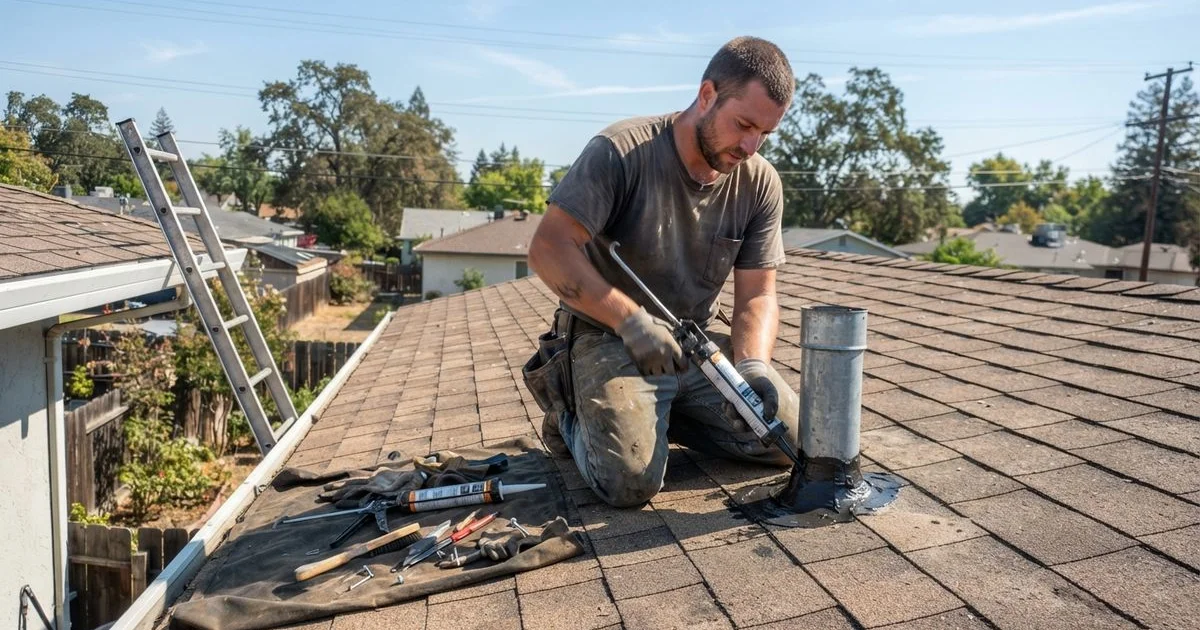
“Roof leak repair” is the single highest-volume search term in this niche locally, and for good reason: a leak is the roofing problem that actually interrupts daily life. Understanding what typically causes a leak and how a repair visit unfolds makes it easier to know what a fair estimate looks like and what questions to ask.
What actually causes most leaks
Leaks rarely start in the middle of an open roof plane. The failure points are almost always at a transition or a penetration:
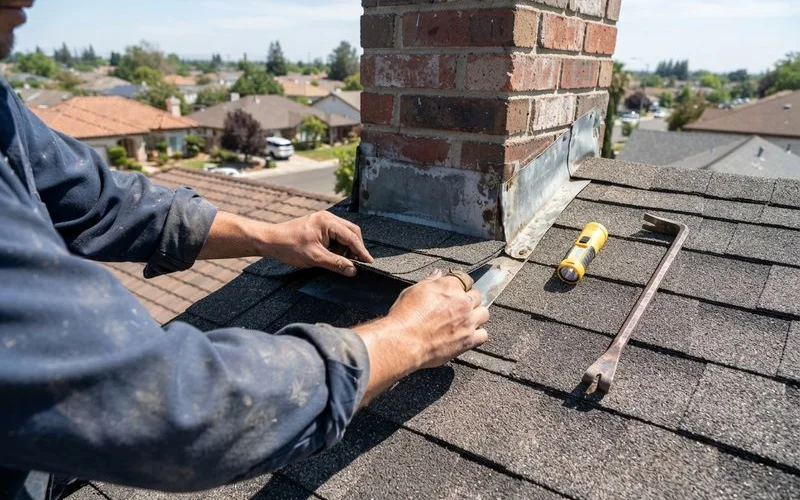
- Flashing around chimneys, vent pipes, and skylights, where the seal between two materials breaks down over time
- Valleys, where two roof slopes meet and water volume concentrates
- Nail pops or lifted shingle tabs, often from wind or age
- Clogged or damaged gutters that back water up under the roof edge
- Aging underlayment on older roofs, where the waterproofing layer beneath the shingles has simply worn out
Knowing this helps explain why a contractor needs to physically inspect the roof and attic rather than diagnose from a photo: the visible damage indoors is often a few feet away from the actual entry point.
What a repair visit typically looks like
- Inspection first. The contractor walks the roof, checks flashing points and valleys near the reported leak area, and often checks the attic from inside for water staining or damp insulation to trace the path.
- Diagnosis and scope. Once the source is identified, you get a specific explanation, not just “there’s a leak” but which component failed and why.
- The repair itself. Depending on the cause, this might mean replacing a section of flashing, resealing a penetration, swapping out a run of damaged shingles, or in some cases repairing decking underneath if water sat long enough to soften the wood.
- A cleanup and a walkthrough. A contractor who does this well shows you where the problem was and what was done, rather than just handing you an invoice.
If the leak source isn’t obvious on the first visit, particularly if water is showing up somewhere unexpected relative to the roof layout, some contractors will schedule a separate diagnostic visit, sometimes involving a controlled water test, before quoting the repair.
Small fix or bigger problem: how to tell
| Sign | Usually a contained repair | Usually points to something bigger |
|---|---|---|
| Leak location | Single spot, near a known penetration | Multiple ceiling stains in different rooms |
| Roof age | Under 15 years, isolated wear | Near or past the material’s expected lifespan |
| Attic check | Localized dampness | Widespread staining or soft decking |
| History | First leak reported | Recurring leak in the same area after a prior repair |
A leak that returns in the same spot after a previous repair is worth flagging directly with the contractor. It usually means the underlying cause, not just the visible symptom, wasn’t fully addressed the first time.
Emergency versus routine
Not every leak needs same-day attention. A slow drip during a storm that you can contain with a bucket is different from active water intrusion threatening electrical fixtures or structural framing. If you’re dealing with the second situation, a service-area roofing contractor offering emergency response is the right call rather than waiting for a standard appointment slot. For anything that isn’t actively spreading, a scheduled visit within a few days is usually reasonable. If the leak showed up right after a storm, the guide to emergency roof repair after a storm covers what to prioritize in the first day or two.
What to ask before you agree to the repair
Ask what specifically failed and why, whether the fix addresses the root cause or just patches the visible symptom, and whether there’s any sign of secondary damage like soft decking that would add to the scope. A contractor who can answer these clearly, and who explains the difference between a patch and a permanent fix, is generally the one worth hiring.
This directory ranks local roofers using recent Google review data rather than paid placement; see the ranking method for how listings are scored before you start calling around for quotes.
FAQ
- How long does a typical roof leak repair take?
- A single, well-defined leak (a cracked flashing seal or a few damaged shingles) is often a same-day or half-day job. If the source isn't obvious, the contractor may need a separate visit just to trace the leak before scheduling the repair.
- Can a small leak wait until the rainy season is over?
- A slow leak rarely stays small. Water tracks along framing and insulation before it shows up as a ceiling stain, so by the time you see a mark indoors, the damage has usually been happening for a while. Getting it looked at sooner limits how far it spreads.
- Why did my roof leak even though the shingles look fine from the ground?
- Most leaks start at a transition point, not in the open field of the roof: flashing around a chimney or vent pipe, a valley where two roof planes meet, or a skylight seal. These spots fail well before the surrounding shingles show visible wear.
- Will the contractor need to get on the roof to diagnose the leak?
- Almost always, yes. Water can travel several feet from where it enters to where it shows up on your ceiling, so a reliable diagnosis usually means a physical inspection of the roof surface and attic, not just a look from the driveway.