
Roofing contractor licensing and permits in California
By Shoail · Updated 2026-07-10
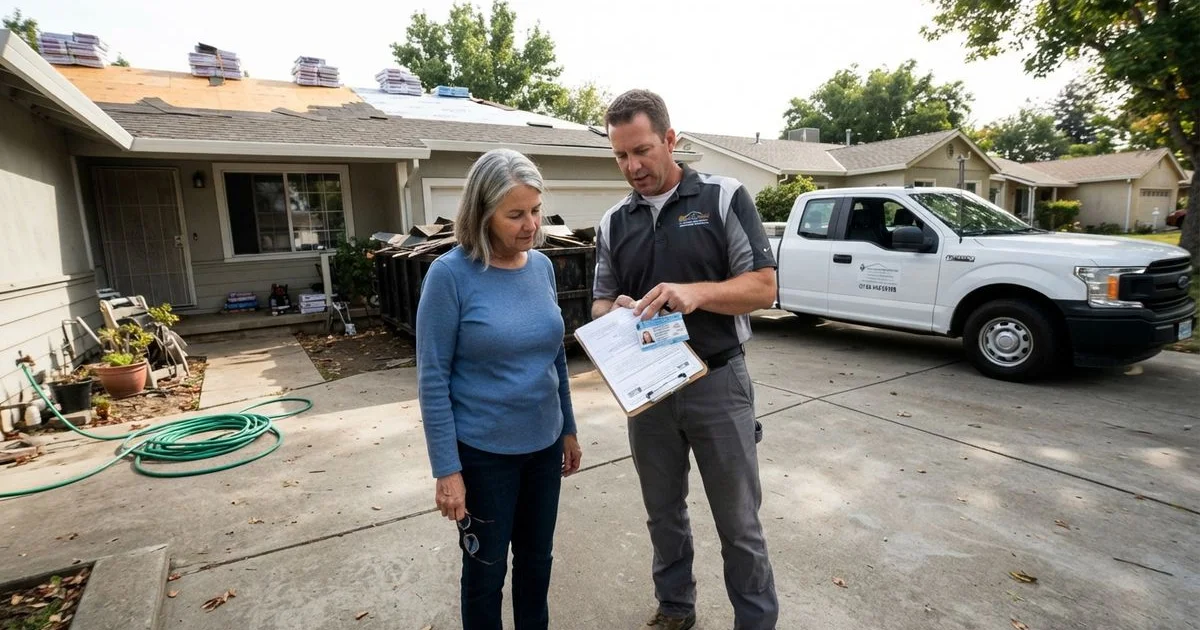
This is general information about California contractor licensing and permitting, not legal advice. Requirements can vary by city and change over time, so confirm current rules with the Contractors State License Board or your local building department.
Roofing licensing exists for a practical reason: a poorly installed roof can fail in ways that are expensive and sometimes dangerous, and licensing gives homeowners a baseline way to check that a contractor has met minimum standards before hiring them.
What license a roofer actually needs
In California, roofing work generally falls under the C-39 contractor classification, issued by the Contractors State License Board. This classification specifically covers the installation, repair, and maintenance of roof systems. A general contractor’s license (Class B) can also perform roofing work in some circumstances, but a dedicated C-39 classification is the more direct signal that a business specializes in roofing specifically.
How to actually verify a license
Don’t take a license number at face value. The Contractors State License Board maintains a public lookup tool where you can search by license number or business name. When you check, confirm three things: the license is currently active, not expired or suspended; the business name on the license matches the name on your quote and contract; and the classification includes roofing work, not an unrelated trade.
It’s also worth checking whether the license has any disciplinary history or complaints on file. This information is public and takes only a few minutes to review before you commit to hiring.
| What to verify | Why it matters |
|---|---|
| License status | Confirms it’s active, not expired or revoked |
| Business name match | Prevents confusion with a similarly named but unlicensed operation |
| Classification | Confirms roofing is actually covered |
| Bond and insurance on file | Protects you if something goes wrong during the job |
| Complaint or disciplinary history | Public record of past issues, if any |
When a permit is actually required
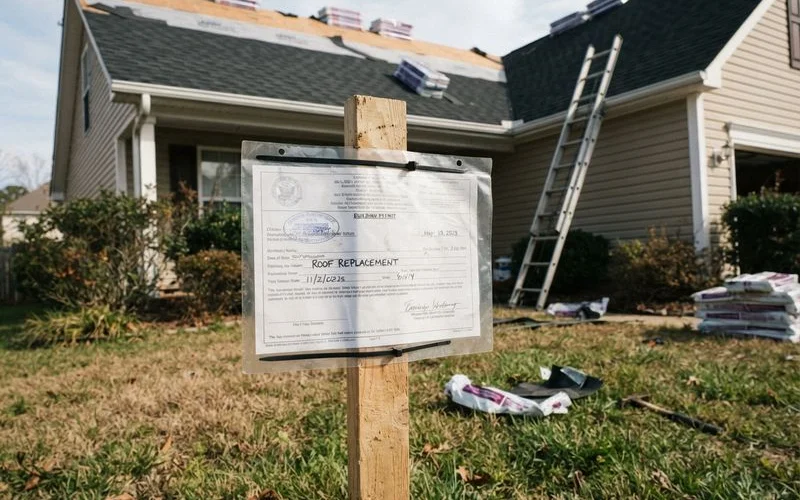
Permit requirements vary by city within the Sacramento area, but a general pattern holds across most jurisdictions: minor repairs, like resealing a small area of flashing or replacing a few damaged shingles, often don’t require a permit. A full re-roof or replacement, where a significant portion or all of the roofing material is removed and replaced, almost always does. Some cities also require a permit for changes to roof pitch, structural modifications, or the addition of skylights.
The clearest way to know for sure is to ask your contractor directly which permits the job requires and confirm with your city’s building department if you want independent verification. A contractor pulling the permit themselves, rather than asking you to handle it, is generally the smoother path, since they’re the one doing work that needs to pass inspection against it.
Why unpermitted work causes problems later
Skipping a required permit might seem like it saves time or money upfront, but it tends to create bigger problems down the line. Unpermitted roofing work can complicate a home sale, since buyers and their agents often ask for permit records on major systems like the roof. It can also create friction with insurance claims later, if an insurer questions whether the roof was installed to code. And without a permit, there’s no independent inspection confirming the work actually meets current building standards.
A quick pre-hire checklist
Before signing a contract, verify the license through the state lookup tool, ask whether the specific job requires a permit and who’s responsible for pulling it, and get the license number and permit plan written into your contract rather than taken on verbal assurance. The warranty terms deserve the same treatment; see roofing warranties in California for what should be spelled out and how to enforce them. These few minutes of due diligence are far less costly than discovering after the fact that the work wasn’t done to code.
Browse this directory for licensed local roofing contractors, and see the ranking method for how listings here are evaluated.
FAQ
- What license does a roofing contractor need in California?
- Roofing contractors generally need a C-39 classification license from the Contractors State License Board. This classification specifically covers installing, repairing, and maintaining roofs.
- How do I verify a contractor's license is real and active?
- Use the Contractors State License Board's public license lookup tool. Search by the license number or business name and confirm the license is active, matches the business name on your quote, and carries the correct classification.
- Does every roofing job require a permit?
- Not always. Minor repairs often don't need one, but a full re-roof or replacement almost always does. Requirements vary by city, so check with your local building department or ask your contractor to confirm before work starts.
- What happens if a contractor works without a required permit?
- Unpermitted work can create problems later, including issues when selling the home, difficulty with future insurance claims, and no assurance the work meets current building code. It can also mean the work wasn't inspected for basic safety and quality.