
Filing a roof damage insurance claim in California
By Shoail · Updated 2026-07-08
This is general information about the insurance claims process in California, not legal or insurance advice. Every policy has its own terms, and every claim has its own facts. For anything specific to your situation, consult your insurer or a licensed attorney.
Filing a roof damage claim follows a fairly consistent process across California insurers, even though outcomes vary by policy and cause of damage. Knowing the sequence in advance makes the process less stressful when you’re dealing with it in the middle of dealing with actual roof damage. Before you start, it’s worth confirming the damage actually qualifies; see is roof damage covered by homeowners insurance for what typically counts as a covered peril.
Step 1: document the damage immediately
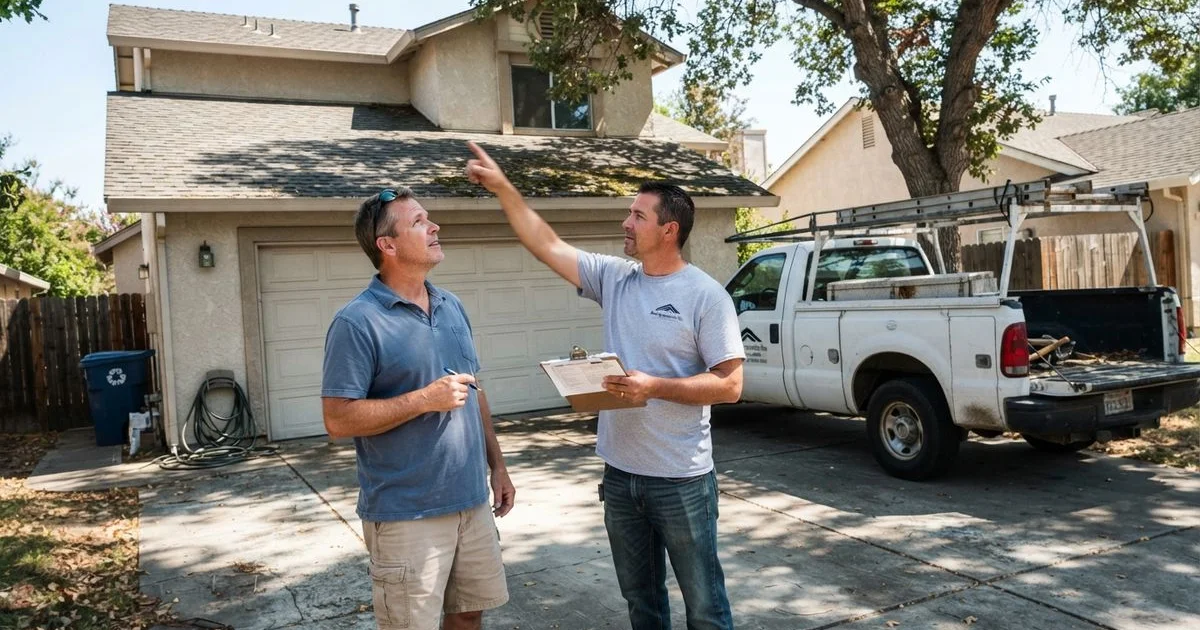
Before any temporary repairs or cleanup, photograph and video the damage from multiple angles, both from the ground and, if it’s safe, from a vantage point that shows the affected area more clearly. Note the date and, if known, the specific event that caused it, such as a named storm or a falling tree limb. This documentation becomes the foundation of your claim.
Step 2: make temporary repairs to prevent further damage
Most policies require you to take reasonable steps to prevent additional damage, such as tarping an exposed area after a storm. Keep receipts for any materials or emergency services you pay for, since these costs are often reimbursable as part of the claim. Avoid permanent repairs at this stage; the goal is to stop the damage from getting worse, not to fully fix it before the adjuster has seen it.
Step 3: notify your insurer
Contact your insurance company to open a claim, either through their claims phone line or an online portal, depending on the insurer. You’ll typically need your policy number, the date of the damaging event, and a description of what happened. Most policies specify a window for reporting damage, so doing this promptly protects your claim.
Step 4: get a professional inspection
A licensed roof inspection contractor can document the extent of the damage and its likely cause in terms an adjuster will recognize. This report, combined with your own photos, gives the adjuster’s assessment something concrete to work from rather than relying solely on a brief visual check. When the cause is a storm or high wind, a dedicated storm and wind damage roof assessment captures the specific details an adjuster looks for.
Step 5: the adjuster’s assessment
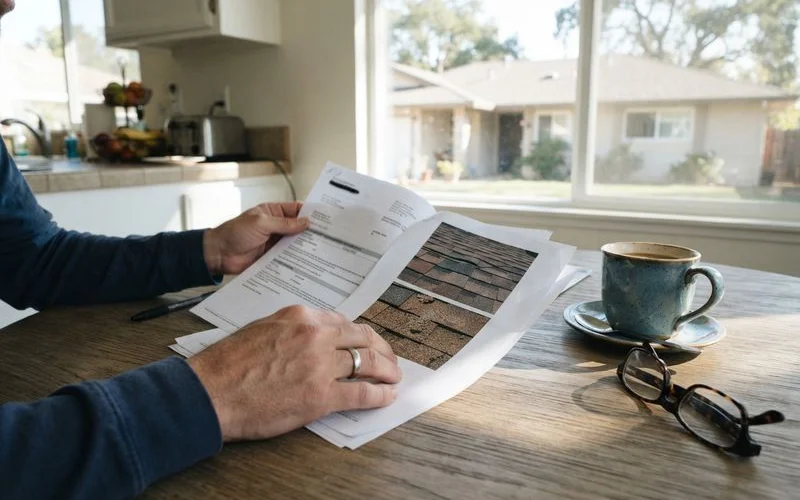
The insurance company sends an adjuster to inspect the damage and estimate repair costs. This assessment determines what the insurer offers to pay, minus your deductible. It’s common for an adjuster’s estimate to come in lower than a contractor’s repair quote, particularly on more complex damage.
Step 6: settlement, or dispute
If you accept the adjuster’s assessment, the claim moves to settlement and payment. If you believe the estimate is too low or the cause was misclassified, you have a few paths forward:
| Option | What it involves |
|---|---|
| Request a re-inspection | Ask the insurer to send someone back out, ideally with your contractor present |
| Submit additional evidence | Photos, a second contractor estimate, or an engineer’s report |
| Hire a public adjuster | A licensed professional who represents your side of the claim, usually for a percentage fee |
| File a complaint | With the California Department of Insurance, if you believe the claim was handled in bad faith |
A note on timing and patience
Claims involving significant or structural damage can take weeks to fully resolve, especially if a re-inspection or additional documentation is needed. Staying organized, keeping copies of every communication, and responding promptly to requests from the adjuster tends to move things along faster than letting correspondence pile up.
Working with your contractor during the claim
A contractor who has handled insurance claims before can be a genuine asset here, not just for the repair itself. Many are used to writing estimates in the format adjusters expect and can point out damage that’s easy to miss in a quick walk-through, like compromised flashing that hasn’t started leaking yet. That said, be cautious of any contractor who offers to inflate an estimate to cover your deductible or promises a specific claim outcome before an adjuster has even seen the damage; both are red flags that can put your claim, and potentially your legal standing, at risk.
Keep a simple claim file
A folder, physical or digital, with your policy number, the date and description of the damage, all photos, the adjuster’s contact information, and copies of every estimate you receive makes the whole process easier to manage. If a dispute drags on or you need to escalate to the California Department of Insurance, having this organized from the start saves real time later.
For general information on how this directory’s contractor rankings work, see the ranking method. You can also browse the full directory for licensed local roofers.
FAQ
- How soon after roof damage should I file a claim?
- As soon as it's safe to do so. Most policies require prompt notice of damage, and delaying can complicate the claim if the insurer questions when the damage actually occurred.
- Do I need a contractor's estimate before I file?
- You can file first and get an estimate afterward, but having a professional inspection and repair estimate ready speeds up the process and gives the adjuster a clear reference point.
- What is a public adjuster and do I need one?
- A public adjuster is a licensed professional you hire to represent your interests in the claims process, distinct from the insurance company's own adjuster. They're most useful for larger or disputed claims, and typically charge a percentage of the settlement.
- What if my claim is denied?
- You can request a written explanation of the denial, appeal directly with the insurer, or file a complaint with the California Department of Insurance if you believe the denial was handled unfairly. Reviewing your policy's specific exclusion language is the first step in understanding whether an appeal has merit.
Related on this site
- Browse roof inspection & insurance claims providers
- Is roof damage covered by homeowners insurance in Sacramento?
- Wildfire smoke, heat, and your roof: what Sacramento homeowners should watch for
- Roofing contractor licensing and permits in California
- Roofing warranties in California: what's covered and how to enforce yours
- All guides →