
Tile, metal, or solar: comparing specialty roofing materials in Sacramento
By Shoail · Updated 2026-07-17
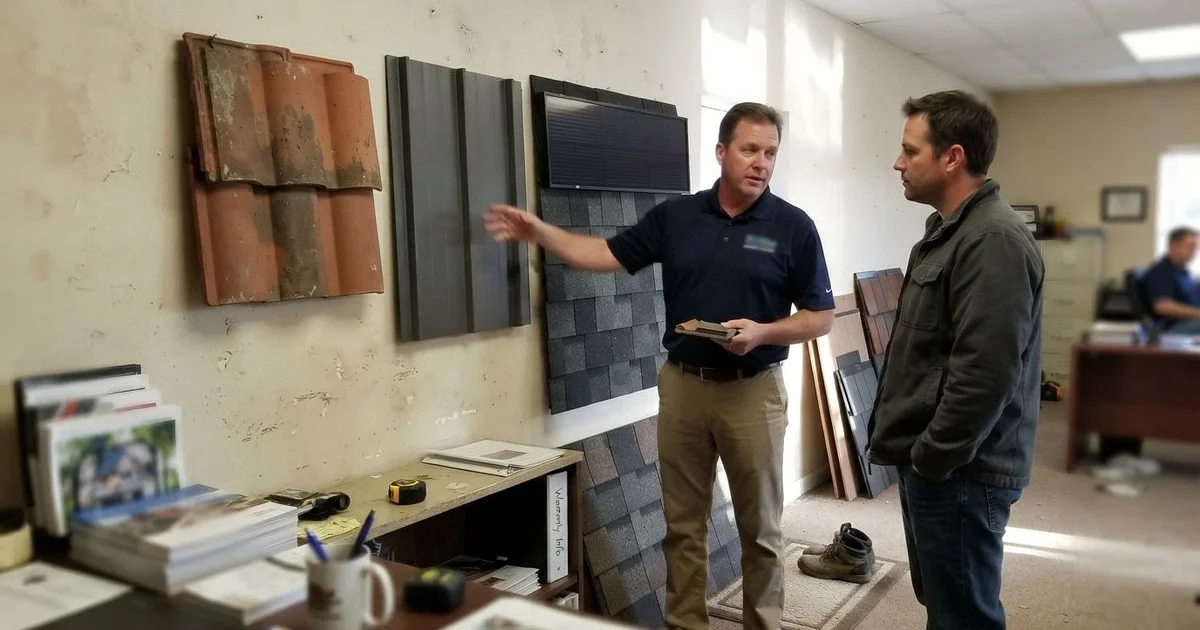
Specialty roofing materials, tile, metal, and solar, cover a smaller slice of the market than standard asphalt shingles, but they’re worth understanding on their own terms since each solves a different problem and fits a different kind of homeowner.
Clay and concrete tile
Tile roofing is chosen mainly for longevity and a specific architectural look common in Spanish and Mediterranean-style homes, which are common throughout the Sacramento area. Individual tiles hold up well to sun exposure and don’t degrade the way asphalt shingles do over time. The tradeoffs are weight, tile roofing requires a structure built to support it, and fragility during repair, since walking on tile incorrectly can crack individual pieces, meaning repairs need a contractor experienced specifically with tile, not just roofing in general.
Standing seam metal
Metal roofing has moved well beyond its old reputation as a purely industrial or barn material. Standing seam metal handles Sacramento’s hot, dry summers well: it reflects more solar heat than dark asphalt shingles, which can meaningfully reduce attic temperatures. It also holds up to wind and doesn’t develop the granule loss or curling that shingles do over time. The upfront cost is higher than shingles, though the extended service life narrows that gap over the roof’s full lifetime.
Solar roofing
Solar roofing refers to roofing material that generates electricity as part of the roof surface itself, distinct from mounting standard solar panels on top of an existing roof. This is a more specialized and typically more expensive project, since it involves replacing the roofing material entirely rather than adding equipment to it. For most homeowners interested in solar, mounting panels on an existing or new asphalt, metal, or tile roof is the more common and more affordable path; a full solar roof makes more sense when you’re already planning a full replacement and want the roofing material and the solar generation combined into one system.
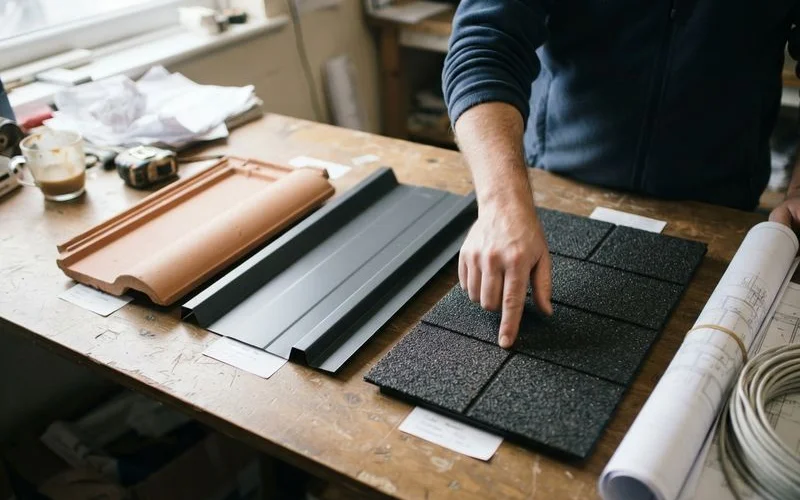
How they compare
| Material | Typical lifespan | Best fit | Main tradeoff |
|---|---|---|---|
| Clay or concrete tile | Long, often decades | Spanish or Mediterranean-style homes | Heavier, fragile to repair |
| Standing seam metal | Long | Homeowners prioritizing heat reflection and durability | Higher upfront cost than shingles |
| Solar roofing | Depends on system | Homeowners doing a full replacement who also want solar generation | Highest upfront cost, more specialized installers |
| Standard solar panels on an existing roof | N/A (panels are separate from roofing material) | Most homeowners wanting solar without replacing the roof | Requires a roof structure suited to mounting |
What actually drives the decision
Budget is the obvious factor, but structural capacity matters just as much for tile, since not every roof frame is built to support the added weight without reinforcement. For metal and solar, the bigger question is usually how long you plan to stay in the home: the higher upfront cost of either pays off more clearly over a longer ownership horizon than a short one. If you’re weighing a replacement ahead of a sale rather than staying long-term, getting your roof ready before you sell covers how material choice factors into resale.
Getting quotes for specialty materials
Fewer contractors specialize in tile, metal, or solar roofing compared to standard asphalt work, so it’s worth confirming a contractor has specific, verifiable experience with the material you’re considering, not just general roofing experience. Ask to see examples of similar work and how long ago it was completed. A specialty roofing contractor who works regularly with tile or metal will have a clearer, more specific answer to installation and maintenance questions than one who occasionally takes on this kind of job.
Structural checks before committing to tile
Before signing a contract for a tile roof, ask specifically whether your existing roof structure can support the added weight or whether reinforcement is needed. This is a genuine structural question, not a formality, and a contractor experienced with tile should be able to walk you through how they’ve assessed it, not just assure you it will be fine. Skipping this step is one of the more expensive mistakes homeowners make with tile roofing, since retrofitting structural support after installation is far more disruptive than confirming it beforehand.
A note on maintenance differences
Ongoing maintenance also differs meaningfully between these material types. Tile roofs need occasional individual tile replacement rather than broad resurfacing, and anyone walking on a tile roof for unrelated reasons, like installing satellite equipment, should be experienced with the material to avoid cracking tiles unnecessarily. Metal roofing generally needs less routine maintenance than either tile or shingles, though fastener and seam integrity are worth checking periodically. Solar roofing maintenance depends heavily on the specific manufacturer’s system and often requires a specialized technician rather than a general roofer.
See the home page to browse local specialty roofing contractors, and the ranking method for how listings are scored.
FAQ
- Is metal roofing a good fit for Sacramento's climate?
- Yes, generally. Standing seam metal handles heat well, reflects solar radiation better than dark asphalt, and holds up to the region's dry summers and occasional heavy winter rain without the maintenance concerns tile can carry.
- How long does a tile roof last compared to asphalt shingles?
- Clay and concrete tile typically lasts considerably longer than standard asphalt shingles, often measured in decades rather than years, but individual tiles are more fragile to walk on and repair, and the underlayment beneath the tiles usually needs replacement before the tiles themselves wear out.
- Can I add solar panels to any type of roof?
- Most roof types can support solar panels, but the mounting approach and cost vary. Composite or metal roofing is generally the simplest to mount panels on; tile roofs require specialized flashing and mounting hardware, which adds cost and complexity.
- Is a solar roof the same thing as adding solar panels to an existing roof?
- No. A solar roof, sometimes called building-integrated photovoltaic roofing, replaces the roofing material itself with solar-generating shingles or panels that also serve as the weatherproof roof surface. That's a different and typically more expensive project than mounting standard panels on top of an existing roof.