
Emergency roof repair after a storm: what to do first
By Shoail · Updated 2026-07-14
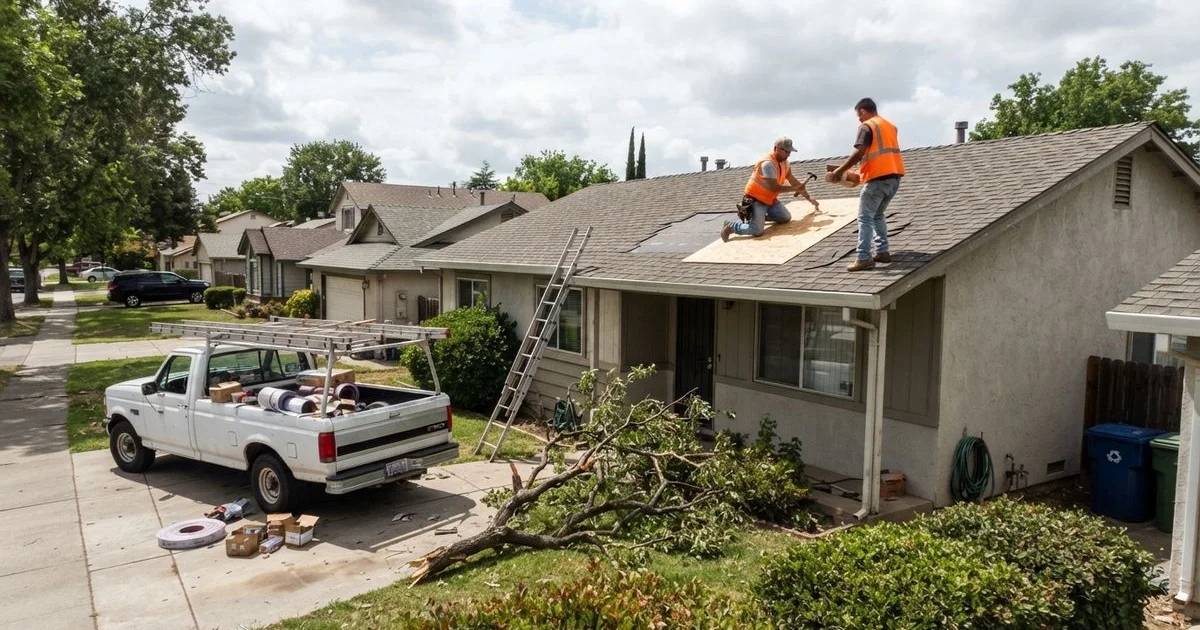
The period right after storm or wind damage is when decisions matter most, and it’s also when people are most likely to make a rushed call they regret. Here’s a clear order of operations.
First: make sure it’s actually safe
Before anything else, check for immediate hazards. Downed power lines near the property, visible structural sagging, or debris that could shift are reasons to stay clear of the area entirely and call emergency services if the situation looks dangerous. A damaged roof is a repair problem; a downed line or an unstable structure is a safety problem, and those get handled differently.
Don’t get on the roof yourself
It’s tempting to inspect the damage up close, but wet or storm-damaged roofing is more slippery and less structurally sound than it appears, and damage you can’t see from the ground, like a weakened section of decking, can turn a simple climb into a fall. Do what you safely can from the ground or from inside: check the attic for signs of active water intrusion, and look at the exterior from a safe distance. A professional crew follows specific safety practices for exactly this kind of exposure; see what a professional roofing crew should do to protect your home for what to expect when they arrive.
Document everything before you touch anything
Photograph and video the damage from the ground, from multiple angles, as soon as it’s safe. If you can safely see the roof from an upstairs window or a neighboring vantage point, get photos from there too. This documentation matters for two separate reasons: it supports an insurance claim, and it gives an emergency contractor a clearer picture of what they’re responding to before they arrive.
Stop active water intrusion if you can, safely
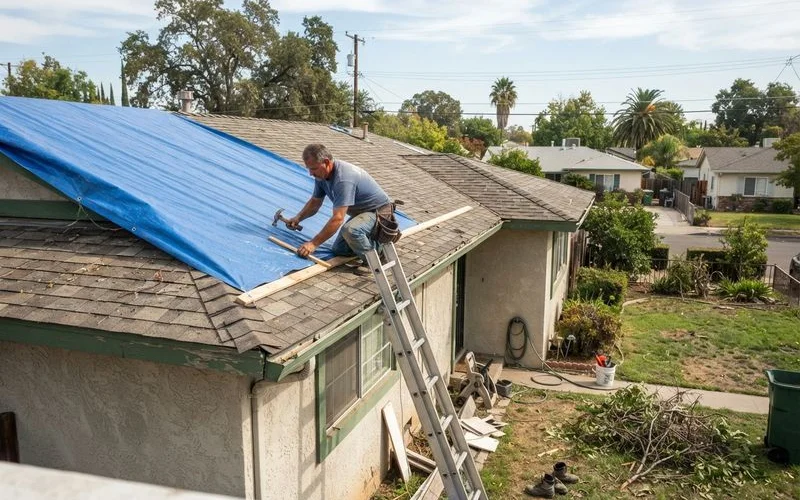
If water is actively coming into the house, move furniture and belongings out of the path, place buckets or containers to catch drips, and if there’s a bulge in a ceiling from trapped water, a small controlled puncture can relieve pressure and prevent a larger, uncontrolled collapse. This is a judgment call and not always the right move; if you’re unsure, it’s better to contain the water than to risk making the damage worse.
Call your insurer and a contractor, in parallel
Open a claim with your insurance company as soon as you reasonably can; most policies expect prompt notice after damage. At the same time, call a roof repair contractor offering emergency service to schedule either a temporary tarp or a full assessment, depending on severity. These two calls don’t need to happen in a specific order. What matters is that both happen quickly, since insurers often want documentation close to the time of the event, and unaddressed openings let damage compound with every additional hour of exposure.
Emergency tarping versus waiting for full repair
| Situation | Likely next step |
|---|---|
| Active leak or visible opening | Emergency tarp, then scheduled repair |
| Missing shingles, no active leak | Scheduled repair within a few days is usually reasonable |
| Minor cosmetic damage, no water intrusion | Standard scheduling, no emergency premium needed |
| Structural sagging or exposed decking | Emergency assessment as soon as possible |
Not every storm-damaged roof needs same-day, premium-priced emergency service. Reserve that for situations with active water intrusion or structural exposure, and use standard scheduling for damage that’s contained and stable.
After the immediate crisis
Once the roof is tarped or the leak is contained, take the time to get a full inspection and a written repair estimate rather than rushing into a contract with the first business that responds. Storm periods sometimes bring contractors from outside the area looking for quick work; verifying licensing and getting a second opinion still matters, even in an emergency.
Browse this directory for local, vetted roofing contractors, and see the ranking method for how they’re evaluated.
FAQ
- Is it safe to go up on the roof myself after storm damage?
- Generally, no. Wet or damaged roofing is more slippery and less stable than it looks, and a roof with visible damage may have weakened spots you can't see from the ground. Leave the roof itself to a professional; focus your own efforts on what you can safely do from inside or at ground level.
- Should I call my insurance company or a roofer first?
- Do both as soon as reasonably possible, but don't wait for one before contacting the other. Photograph the damage first, then call your insurer to open a claim and a contractor to schedule an inspection or emergency tarp, since both processes can move in parallel.
- What's a temporary tarp and do I need one?
- A tarp is a temporary waterproof cover installed over damaged roofing to stop water intrusion until permanent repairs can happen. If there's an active opening or significant missing material, a tarp is usually worth arranging quickly, even if full repair takes longer to schedule.
- How quickly can an emergency roofer typically respond?
- Response time depends on the severity of local storm impact and how many homes are affected at once. Contractors offering emergency service generally prioritize active leaks and structural exposure over cosmetic damage, so be specific about your situation when you call.