
Roof work safety: what a professional crew should do to protect your home
By Shoail · Updated 2026-07-23
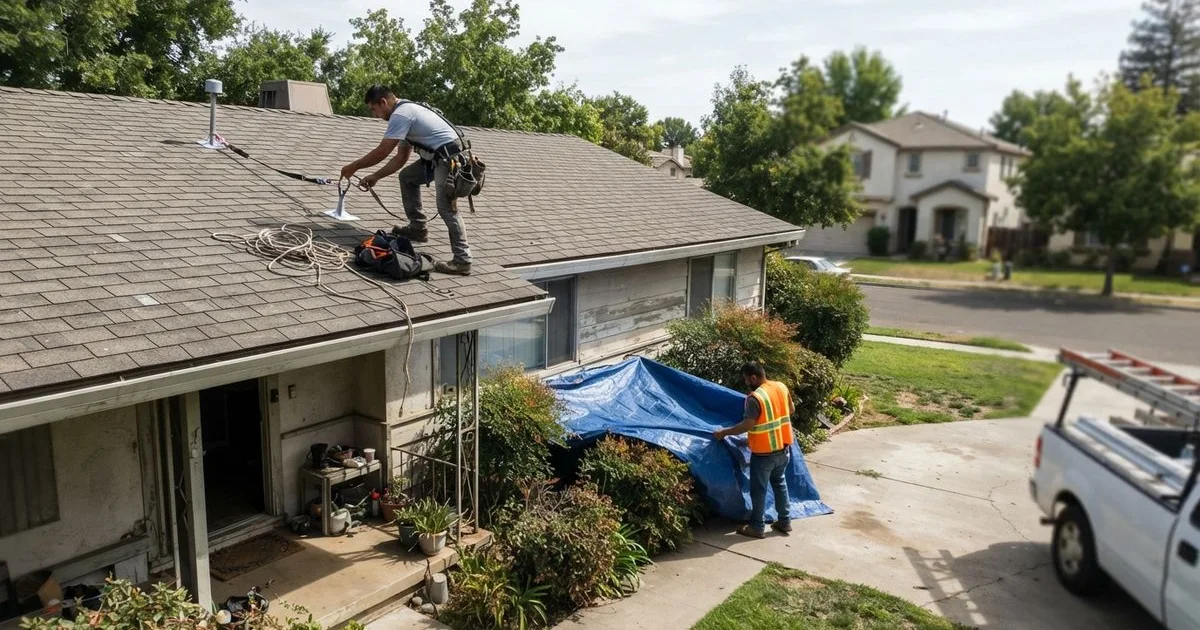
Roofing work is disruptive by nature: material comes off, new material goes on, and both processes generate debris, dropped fasteners, and foot traffic across your property well beyond just the roof itself. Knowing what a responsible crew actually does to manage that disruption helps you spot the difference between normal mess and a genuine problem.
Protecting the property before work starts
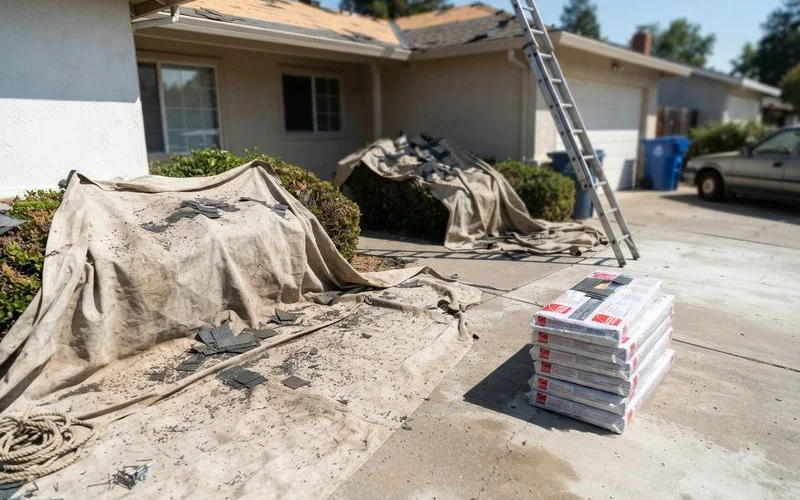
A professional crew typically covers or moves anything near the work area that could be damaged by falling material: patio furniture, grills, planters, and vehicles parked close to the house. Tarps or protective sheeting go down over landscaping, walkways, and any outdoor living space directly below the work zone. This happens before the first shingle comes off, not as an afterthought once debris has already landed somewhere it shouldn’t.
Debris and overspray damage to nearby property, patios, cars, and outdoor furniture is a recurring complaint pattern in the trade, and it’s almost always preventable with basic setup. If a crew skips this step, it’s worth raising directly before work proceeds rather than after something gets damaged.
During the job
Active tear-off and installation involves constant foot traffic and falling material, which is exactly why keeping children and pets away from the work area matters, not just as a general precaution but because debris can fall unpredictably and equipment left on site isn’t something you want unsupervised near them. A responsible crew will also be mindful of ladders and material staging, keeping walkways and driveways clear enough for normal household access where possible.
The cleanup, and why the magnetic sweep matters
At the end of the job, or each day on a multi-day project, cleanup should include gathering and disposing of debris, folding up protective tarps, and running a magnetic sweep across the yard, driveway, and any nearby grass to pick up stray roofing nails. This last step is easy to skip and easy for a homeowner to overlook asking about, but loose nails left in a yard are a genuine, ongoing hazard, for feet, tires, and pets, well after the crew has left.
| Safety step | What it looks like | Why it matters |
|---|---|---|
| Pre-work setup | Tarps over landscaping, furniture moved or covered | Prevents avoidable property damage |
| During work | Debris cleared regularly, ladders and materials kept organized | Reduces tripping and falling hazards |
| Magnetic sweep | Yard and driveway checked with a magnetic roller | Catches stray nails that are otherwise easy to miss |
| Final walkthrough | Crew reviews the completed area with the homeowner | Confirms cleanup and gives you a chance to flag anything missed |
What to ask before the job starts
Ask directly how the crew protects landscaping, vehicles, and outdoor furniture, whether a magnetic sweep is included as standard practice, and how debris is hauled away. A roof repair or replacement contractor who answers these specifically, rather than with a general “we clean up after ourselves,” is generally the one with an actual process behind the answer.
If something does go wrong
Property damage or an incomplete cleanup happens occasionally even with careful crews. What separates a reasonable outcome from a bad one is how the contractor responds when it’s raised. Document any damage with photos as soon as you notice it, and raise it directly and promptly, ideally before final payment changes hands. A contractor who addresses it without much friction is worth the trust; one who becomes unresponsive once payment is in hand is a pattern worth remembering for future reviews.
Setting expectations before the crew arrives
A short conversation before work starts saves friction later. Ask specifically where materials and dumpsters will be staged, whether the crew works during specific hours you’d rather they avoid, and how they plan to handle a day interrupted by unexpected rain, since a partially finished tear-off left exposed overnight is its own kind of risk. A contractor who has clear, specific answers to these logistics questions is generally the one with an established process, not just good intentions.
Weather and multi-day jobs
Larger jobs that span more than a single day carry an additional safety consideration: an unfinished roof left exposed overnight or ahead of unexpected weather. A responsible crew tarps and secures any open sections before leaving the site at the end of each day, particularly during Sacramento’s wetter months. If a job is scheduled during a period with a real chance of rain, it’s reasonable to ask upfront how the crew plans to protect the exposed structure between work days. If a storm does move in unexpectedly and water gets past a temporary cover, the guide to emergency roof repair after a storm covers what to do first.
Browse this directory for local roofing contractors, and see the ranking method for how they’re scored.
FAQ
- What should a crew do to protect landscaping and outdoor furniture?
- A responsible crew covers or moves patio furniture, grills, and vehicles parked nearby, and lays down tarps or protective sheeting over landscaping and walkways before work begins, since falling debris and dropped materials are a normal part of tear-off, not an unusual accident.
- How is debris typically cleaned up after a roofing job?
- A magnetic sweep for stray nails, tarping or bagging of shingle and material debris, and a walkthrough with the homeowner before the crew leaves are standard practice. Ask specifically about the magnetic sweep, since loose nails are one of the most common lingering hazards after a roofing job.
- Is it safe for kids or pets to be outside during roofing work?
- It's best to keep children and pets indoors or well away from the work area during active roofing, both because of falling debris and because the equipment and materials on site aren't something you want unsupervised near them.
- What if the crew leaves a mess or damages something and doesn't address it?
- Bring it up directly and promptly, ideally before final payment. A reputable contractor will address damage or an incomplete cleanup without much pushback; if they don't, it's worth documenting the issue with photos and referencing it in any dispute or review.